Saturday, May 30, 2009

Trouble


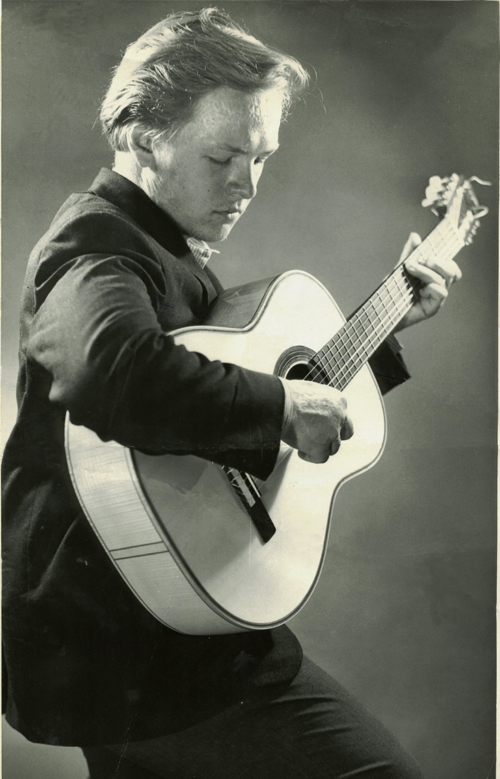
Thanks to the relative success of a previous music-related post of mine, I have decided to again attempt to arouse some discussion by discussing a 60's era pop-folk singer. Yusuf, aka Yusuf Islam, aka Cat Stevens, aka Steven Demetre Georgiou, as mentioned in the previous post, is one of the more frequently appearing artists on my pandora radio station. Several months ago, I heard for the first of many times on my station Stevens' masterwork "Trouble."

I call this song a masterwork because, aside from its undeniably solid musicality, it grippingly tells Stevens' own personal story of nearly defeated agony, giving a completely transparent view of his feelings at that time. Stevens wrote the song at the age of 19, during a period of nearly a year of mostly bed-ridden recovery from tuberculosis and a collapsed lung. Addressing Trouble (interpreted by many as death) directly, Stevens virtually begs to be left alone after all he has been through: (see full lyrics here)

Trouble
Oh trouble set me free
I have seen your face
And it's too much too much for me

Trouble
Oh trouble can't you see
You're eating my heart away
And there's nothing much left of me


Musically unadorned, featuring mostly Stevens alone on acoustic guitar, songs from this period mark a musical and spiritual transformation for him, from highly orchestrated pop and pop star lifestyle to a more introspective folk style and life focused more on spirituality, including taking up meditation, yoga and vegetarianism.

Its simplicity, clarity and atmospheric style have made it a popular choice for inclusion on movie and TV soundtracks. It was most memorably featured in the 1970 classic black comedy Harold and Maude, during the scene of Maude's impending death. It also was featured on ER and the pilot episode of JJ Abrams' Alias, in a flashback sequence showing Sydney Bristow's ill-fated recruitment into the evil SD-6 program.

The song also has been covered by several artists, most notably by the tragic late-90s folkster Elliott Smith and Pearl Jam frontman Eddie Vedder, who often performs the song at PJ's live shows.

I encourage you to listen to Steven's original version as well as Smith's and Vedder's covers, and comment about the merits of each. I must say, Stevens' takes the cake for me, though this is one of the instances I feel Vedder's throaty howl adds to a performance rather than detracting from it.

Thence, I would also recommend giving a listen to two other songs titled "Trouble" which are not covers--Ray LaMontagne's more upbeat 2004 title track and Coldplay's 2000 piano ballad. Interesting tangents on a similar idea all.

Image credit http://musakazhim.files.wordpress.com/2009/02/yusuf-islam.jpg

Monday, May 18, 2009

Hotel Photos - Hotos, or Photels?

Last week I was sent on assignment with one of my coworkers to cover an event sponsored by one of JMU's institutes. I won't make any comments about the symposium itself, as to maintain professional balance when talking about work on a personal, yet public blog. What I will do is post a link to the facebook page and Twitter feed we set up to cover the event in near real-time. It was an experimental trial for us using social media in new ways, and I'll let others judge how successful our first attempt was.

But that's not the real point of this post, as you could probably guess from its title. The symposium spanned two days, and they put us up in a nice hotel in D.C., the Grand Hyatt. I was pleased with that in an of itself, but when I checked in Tuesday, it got even better. Since we were fairly early, the hotel didn't have the entire block of rooms in our group ready, and they offered to upgrade me to the "Congressional Suite" at no extra cost. Below are some photos of said room.


Central sitting area


Entertainment area with flat-screen TV and stereo


Full bar (not stocked)


Powder room? (Little area outside bathroom)


Breakfast nook/work area


Pool table!


And, finally below is a shot of the sign of the crappy hole-in-the-wall Chinese joint we ate lunch at in Chinatown. The food was substandard, but the name was too good to pass up.

Thursday, May 7, 2009

Jack-ob


This season of LOST is quickly coming to an end, and all the various events of the series are coming to a head. One of the main mysteries throughout the show has been the true identity/form of being of the shadowy and never-fully-seen commander of the Others, Jacob. Since his first mention seasons ago, Jacob's identity has been a source of rampant speculation on the web. I've read entries theorizing that nearly every character seen on or off the island is truly Jacob. Most are ridiculous. The latest and seemingly most credible idea is that Jacob is not anyone we've seen already, as evidenced by ABC's announcing the casting of Mark Pellegrino as "Man #1" for the next and final season, and reports that he was seen filming reenactments of some vital scenes from the LOSTies' pasts. See some non-definitive photos of the set here.

If that's the case, it initially strikes me as less creative than having Jacob be a character we've already seen, but depending on how it's handled, it could be great. If, however, that's not the case, I'll throw in my vote for who it may be (by no means am I convinced).

I vote Jack. First, let's think about the history of Jacob. The earliest indicator we know of his being mentioned was when John Locke in 1954 stormed into the Hostiles' camp, demanding to see Richard Alpert and saying Jacob sent him. We then see in 1977 Richard take Jacob's wishes under consideration in taking a wounded young Ben Linus from Sawyer and Kate, and various times in the original present time of the show, with Ben, Locke, and Hurley visiting the cabin, encountering Christian Shepard and Claire there along the way. Thus, we can fairly assume, Jacob has not always inhabited/lived in/been trapped in the cabin. The cabin was not built until the 1970s or later by Horace Goodspeed (definitive year not known).

If the cabin were built around or before the time of the incident, which we should be seeing in the Season 5 Finale, any number of characters (including Jack) fleeing from ground zero could make their way to the cabin for safety, and become trapped there, possibly in some sort of time-space-shift phenomenon that occurs, thus allowing him to exist in all the different time periods simultaneously. One theory would be that the two separate "present times" currently existing on the island (the 1977 greater-Dharma crew and the 2007 survivors including Locke, Sun and Ben) will be merged again into one, with unknown consequences. Something along the lines of this is supported by producer Damon Lindelof's teaser for the season finale he offered at the Star Trek premier last week: "All I will say is that it is time for the time travel craziness to end," he said. "And once it does end, something very, very surprising will happen in its wake. It is a little bit of a game-changer."

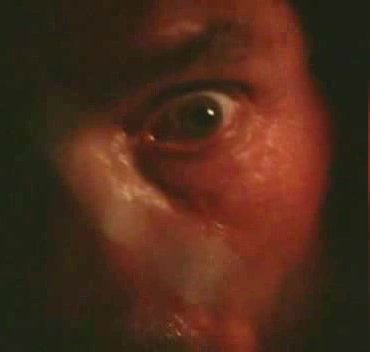
Supporting evidence would include the obvious connection the Shepard family has to the cabin, as we've already seen Jack's undead father, Christian, and his half-sister, Claire, in the cabin. Another would be Jack's status as a detached leader or his people (see also discussion of his tattoos), his in the past being called a "miracle worker" for his ability to heal people, and his name being a variant of Jacob. Then there is also the similar focus on single-eye camera shots of both Jack and Jacob (see pictures, above - top two are Jack, bottom two are Jacob). The eyes appear at least similar enough to be possible.

Finally, on a practical level, it has been reported by the producers that Matthew Fox (who portrays Jack), is the only actor who knows how the series will end (source), thus it would make sense that if Jacob plays a large role in the conclusion of the series, Shepard would already know from his previous portrayals.

NOTE: This is incomplete, and more an exercise of my boredom than a definitive piece of LOST theorizing.

Images from lostpedia.

Sunday, May 3, 2009

Why new technology is sweet


My last post, highlighting the online music service Pandora, gave an example of one new technology that is making my life more enjoyable. It also spawned another example, as follows: Searching YouTube for any Simon and Garfunkel recordings of Jackson C. Frank's "Blues Run the Game," I found a recording by Nick Drake, whom I've mentioned many times previously. After watching/listening to it, YouTube also suggested I listen to his recording of Bob Dylan's classic, "Don't Think Twice, It's All Right."

Though I had read about Drake and Dylan's cross-influence on each other, I had not known Drake actually recorded any covers of Dylan's songs, so this clearly was a nice find for me, and now for any of you who similarly find such things of interest. As it turns out, Drake's recordings of both Frank's and Dylan's songs appear only on what is essentially a bootleg version of some "working tapes" of his from the 60's. After a little research, I'm still not sure if the album, "Tanworth In Arden 1967-1968" has ever been authorized by the Drake estate or released under any legitimate record company, but for Drake enthusiasts, it's a gold mine. It comprises 18 tracks, including the aforementioned covers and some original, never-released songs. Among them is a track, "All My Trials," which features Drake's actress sister, Gabrielle, (pictured, right) in a vocal duet.

I could go on about the intrinsic value of such stuff to collectors, hobbyists and enthusiasts, but I'll otherwise summarize thusly: without web apps such as Pandora, search engines, Wikipedia, YouTube and Amazon, I can't imagine how long such a chain of discoveries would have taken me to make. (With them, it took about 5 minutes). Honestly, I probably never would have heard of Frank or either Drake, or a host of other people, places and things which are common points of thought in my life. I am probably able to learn more every day in a matter of minutes on the web than was possible in hours or even days previously. How did people learn or accomplish anything in the days before such technologies? I'm not sure, but I certainly am appreciative that they're around for people today.

IMAGE: Gabrielle Drake in character on the short-lived 70's British sci-fi TV show "UFO". From http://freespace.virgin.net/b.world/Gabrielle_Drake.jpg.

Thursday, April 30, 2009

Blues Run the Game


I am once again indebted to the amazing service that is Pandora. A few days ago I was listening to the free internet radio station at work when I heard a particularly striking and new song for the first time. You see, Pandora allows you to customize your own streaming radio station(s), using "seed" songs, artists, and albums as well as thumbs up or down ratings to formulate a 'music genome' of similar music, which plays on your station (any song can be skipped), all for free. I created my station, Mellow Kitty, a long time ago and listen to it throughout the entire day while I'm at my desk, so my tastes have been very refined.

As the name suggests, it mostly comprises mellow, work-friendly music. Among the most commonly played artists are Paul Simon, Nick Drake, James Taylor, Bens Harper and Folds, Cat Stevens, John Mayer, etc. In the time shortly after I created it, while the station was working off just a few of my "seed" selections, it provided a wider variety of music styles for me to rate up or down, but these days, it's pretty rare I hear a song I haven't heard or whose artist is foreign to me (with the exception of Broadway and opera songs, which I almost always thumbs down, but still occasionally get spit out at me for unknown reasons.)

Anyway, the song I heard on that fateful day was "Here come the Blues" by Jackson C. Frank. From a technical-musical standpoint, it was not significantly different from some of the folk-blues works by other artists I hear regularly, but there was a melancholic sweetness to his voice, similar to Drake's, that literally forced me to stop my work until I had looked up more information about the guy singing.

As it turns out, there are plenty of reasons for Mr. Frank's melancholy. According to his Wikipedia entry, he was acquainted with tragedy from an early age. At the age of 11, a furnace explosion at his elementary school killed 15 of his classmates and sent him to the hospital for 7 months. The trauma of the event would prove to be a major source of depression and mental illness throughout his life, though it was during his long convalescence that he first learned to play the guitar.

In his early 20's, he shipped off to England and befriended a young Paul Simon, who was touring the country. Simon produced Frank's self-titled album, which brought him a measure of success in the U.K. before his mental illnesses worsened, leading to his retreating to the U.S. again. At the age of 27, he married a former fashion model and had a son, who soon after died of cystic fibrosis. The latest tragedy sent him to the brink, and he was committed for his illness. He enjoyed a brief revival upon the re-release of his first album in the late 70's, but continued his downward spiral.

In 1984, in his forties, Frank again traveled to the U.S., searching for his old friend Paul Simon, but was unsuccessful and wound up homeless and living on the streets. Just at the time his music was being rediscovered on the folk scene in the early 1990's, he lost sight in one eye due to his being shot with a pellet gun by a few young boys firing indiscriminately in a park where he was sitting. With aid from some folk aficionados who found him, he began work on some new recordings, with little success. He died in 1999 at the age of 56, shortly before the first CD release of his self-titled album in 2001.

His musical legacy, however, has proven far longer than his life. Covers of his most famous song, "Blues Run the Game," were done by Drake, Simon and Garfunkel, and Counting Crows, among others. Another Frank Song, "Milk and Honey" has been popularized by Drake's cover as well. Nirvana recorded a stirring rendition of an unreleased song of his, "In the Pines," for their 'unplugged' album in the early 90's as well.

His style walks the line between folk, blues, and 60's pop, with vocals similar to the high tenor of Roy Orbison underscored with just a hint of the trampy gravel of Tom Waits, and accompaniment by simple acoustic guitar. His life has been immortalized through one particularly fitting stanza from his most famous song:

"Livin' is a gamble baby - Lovin's much the same - Wherever I have played - Whenever I've thrown them dice - Wherever I have played - The blues have run the game"

I would highly recommend Frank to anyone who likes Drake, Simon, Bob Dylan, or really depressing life stories. Thanks, Pandora.

Friday, April 17, 2009

Keeping it Loki


I just finished up defeating Loki, the final evil lord in the tremendously awesome early 90's Shareware PC adventure game "God of Thunder." I know Jeffro is very familiar with the game, but for others, the plot goes something like this:

You are a highly pixelated and compressed animated Thor, the Norse god of thunder (the mostly red blob pictured at right with the hammer in front of it). You have to navigate your way through three levels, defeating three different evil guys. Each level follows a different story line.

In Level 1, you, with only your powerful throwing hammer and some guidance from your orb-contained god-father, Odin, you must save a local village from the evil reign of lizard?/monster thing Jormagund, who similar to King Koopa Bowser from the Mario series, wears a crown (which covers his only weak spot.)

Along the way, you must solve some terribly interesting (and some just terrible) puzzles, most of which involve pushing rocks, blocks and other objects through virtual mazes to block cycloptic worms from shooting you with some (bullet? spit?) things that kills you, as well as battling various simple dangerous creatures, picking up jewels, magic items and interacting with, pillaging and using the villagers to get stuff you need for your final showdown with Jormagund.

The second and third levels are similar, though I think the puzzles in the first are superior to the others. In the second level, you must free the villagers from enslavement at the hand of Nognir, who forces them to work mining Teflor, a non-stick substance of some kind (Level Two is titled 'Non-stick Nognir'). In the third, you must defeat your own god-brother, Loki, who simply imprisons people for various minor offenses such as cussing, spitting, kissing your mother or father goodnight, and dropping ice cream cones on his foot.

None of the bad guys are terribly difficult to defeat. I just downloaded the game a few days ago and beat all three levels in a matter of hours spread over the days since. But it is still worth the free download (available here) because of its nice blend of spatial/logic puzzles and humorous tidbits with just enough highly unrealistic violence. I suppose you could purchase and register the game as well, if the makers are still a viable company (I don't know). Also notable is the electronic soundtrack, some of which sounds eerily similar to some tunes by rotating California hippie music ensemble Golden Shoulders, who I thrice saw perform live at IWU.

So if you're bored and/or feeling nostalgic for a time when the U.S. was making peace, not war, in the Middle East, Pepsi was crystal clear and video games were simpler, check it out. You won't be disappointed.

Saturday, April 11, 2009

Stan in the Place Where You Live

So here's a gem I found on the web. It is a fairly low-quality documentary about the late, great Canadian folk legend Stan Rogers, called "One Warm Line: The Legacy of Stan Rogers." I have been able to find very little information about it, other than that it was made by a production company called Kensington and directed by two men, Alan Collins and Robert Lang, in 1989, some six years after Rogers' death in a plane crash.


via videosift.com

It contains several interviews with presumed Canad(ians/-iennes,) most of whom are not identified, over an often stunning backdrop of the Canadian wilderness and several of Stan's most-known songs. I must say, having to this point only heard his booming voice on CD, it is a nice treat to see some of his live performances, which are vibrant and moving.

Apparently, some PBS (or CBC) stations have aired the documentary a few times throughout the years, but several commenters on various sites have complained about its virtual non-availability outside of a few public libraries who have it on VHS. However, it does appear to be available on DVD through Kensington's Web site, for $27.95., or through the company that distributes Rogers' works, Fogarty's Cove Music. However, it appears that to make a purchase through FC, one must print and fill out a form and send it snail (or, more likely, moose) mail. That seems a little ridiculous these days, but I guess it is Canada.

Anyway, I hope the video res is high enough that you can view it easily. A more intense Web search may turn up a better version.