Good Day to all, especially to all fathers. It's about 2 in the afternoon here, and I'm sure we've all sent, said or otherwise expressed our Father's Day greetings to those who have rightfully earned them. I chose an e-card with a clever animation spelling out words on a crossword puzzle. I thought it awfully appropriate for Pops Armstrong, an avid puzzle-wiz.
Also, not necessarily in recognition of anything, other than the fact that I had about a half pound of strawberries in my fridge getting ready to turn, I decided to make an experimental strawberry-apple tart. I pulled a quick and easy (though still messy) tart dough recipe off the web and improvised a filling of said strawberries and the only other type of fruit I had on hand, apples. The baking is done. I have not tasted it yet, so I cannot tell you if it succeeded in execution. But I can tell you the oven succeeded in heating my apartment up to an unbearable temperature.
To aid in the concluding of my first issue and to temporarily escape the other, I decided to head to the grocery store to pick up some vanilla ice cream to go on top of the tart (I took a picture of the tart on my phone but have not uploaded it to my PC yet. Perhaps, if I remember, I will later.) It was on the drive home from the store that I saw a greeting on a familiar chain restaurant's sign that would put to shame any words I could write or say to honor the fathers on their day, promising more than even my tasty tart could deliver.
The sign outside of Golden Corral, you see, was missing half its lights, burnt out. What I presume the intended message was supposed to read was: "Father's Day Endless Buffet."
What it did say was: "Fat Day End Buff."
They apparently are offering an all-day gorge-a-thon for all the hard-working fathers out there, while promising that all said eaters will end the period in fantastic physical shape. A perfect gift. Sorry we're not closer together, Pops, I'd like to challenge their claim.
Sunday, June 21, 2009

Wednesday, June 17, 2009
The Literature of LOST

Even though my previous literature-themed post has proven powerless in prompting proper repartee, I'll follow it up with another. It really combines two of my more enjoyable topics to post about, literature and LOST. This show, more than any other I've watched, weaves together not only a brilliant independent storyline but also deft symbolism, allusion and straight intertextuality with lots of different works form the literary canon. The Simpsons has traditionally done of good job in referencing (or parodying) specific works over the arc of an episode, but that is clearly more of a cartoon-sitcom than a series with any kind of overarching storyline.
Among the more recognizable works clearly alluded to (and noted by lostpedia) are Alice's Adventures in Wonderland, Stephen King's Dark Tower series, Lord of the Flies, Dickens' Our Mutual Friend, Slaughterhouse-Five, The Wonderful Wizard of Oz, the Bible (of course) and numerous others that lend smaller bits of themology to specific episodes via episode titles (Through the Looking Glass, Catch-22, A Tale of Two Cities) or through characters being shown reading them (Carrie, The Brothers Karazamov, Watership Down).
A thorough analysis of how each of these titles fits into the larger literary world of LOST is more like the stuff of a master's thesis (one I wouldn't mind trying to use), but this post on a more superficial level will examine just a few of them.
As you know from previous posts, I've read several of the aforementioned titles, so I'll focus mostly on those, trying to do so without spoiling any future episodes for those who haven't gotten that far into the series yet.
The most obvious intertextual partner, even to people who've never seen an episode of LOST, would be Lord of the Flies. I think it's impossible for anyone to produce of creative work about castaways without at least some surface-level references to William Golding's masterwork. It is iconic, ubiquitous, plainly clear and, clearly, plainly good. Elements of the series evident even from the earliest episodes echo LOTF--the mysterious and unseen "monster" and Sawyer's references to going "Lord of the Flies" or "wild" in comparison to Jack's urges to create a peaceful society among the survivors, and rampant wild boars. LOST's storycrafters, though, have done a good job of resisting the urge to make mere, clear correlations in their references. For instance, Locke exhibits characteristics of LOTF's Jack--enjoyment and skill at hunting, a hinted-at dark side that could burst at any time (see backgammon pieces, eye scar), and later leading a rift in the group and crating a separate camp, yet also shares many traits with LOTF's Simon--an innate, peaceful connection with the island, pseudo-divinity, a secret retreat on the island away from others (the hatch). Jack Shepard shares his first name with LOTF's resident representative of the id, but exhibits more similarities with Golding's Ralph, the do-gooder, de-facto leader who wishes to keep the group together under the auspices of civility. Even Sam'n'Eric, the virtually identity-less twins of LOTF are hinted at in the ambiguous duo of Scott and Steve on LOST. The parallels of themes of technology and society and the human psyche are more complex and deeper.
Sticking with a time span of only the early part of the first season to avoid spoilers, the other clear partner so far is Alice's Adventures in Wonderland. Casually, the entire experience of coming, or being transported in some way, to the mysterious, physics-defying and magical island parallels Alice's entering her fantastic world. Season 1's fifth episode is titled "White Rabbit," a clear reference to the animal that Alice Follows at the onset down the hole to enter Wonderland. In LOST's case, the clearest parallel is the appearance of dead (undead? reanimated? hallucination?) Christian Shepard, Jack's father, on the island whom Jack chases, eventually, to the caves. It is there that Jack wishes to make a new camp, for its shelter and fresh water supply.
Past that, it will be difficult to discuss much more without getting into spoiler territory. So, for those of you watching or re-watching episodes, please note on this blog or blogs of your own any literary points that strike you throughout the course of the show. I could talk (or write) about this stuff all day. If only there had been a "Literature of LOST" course while I was in college...
Image from wikipedia.
Monday, June 15, 2009
Fighting Words
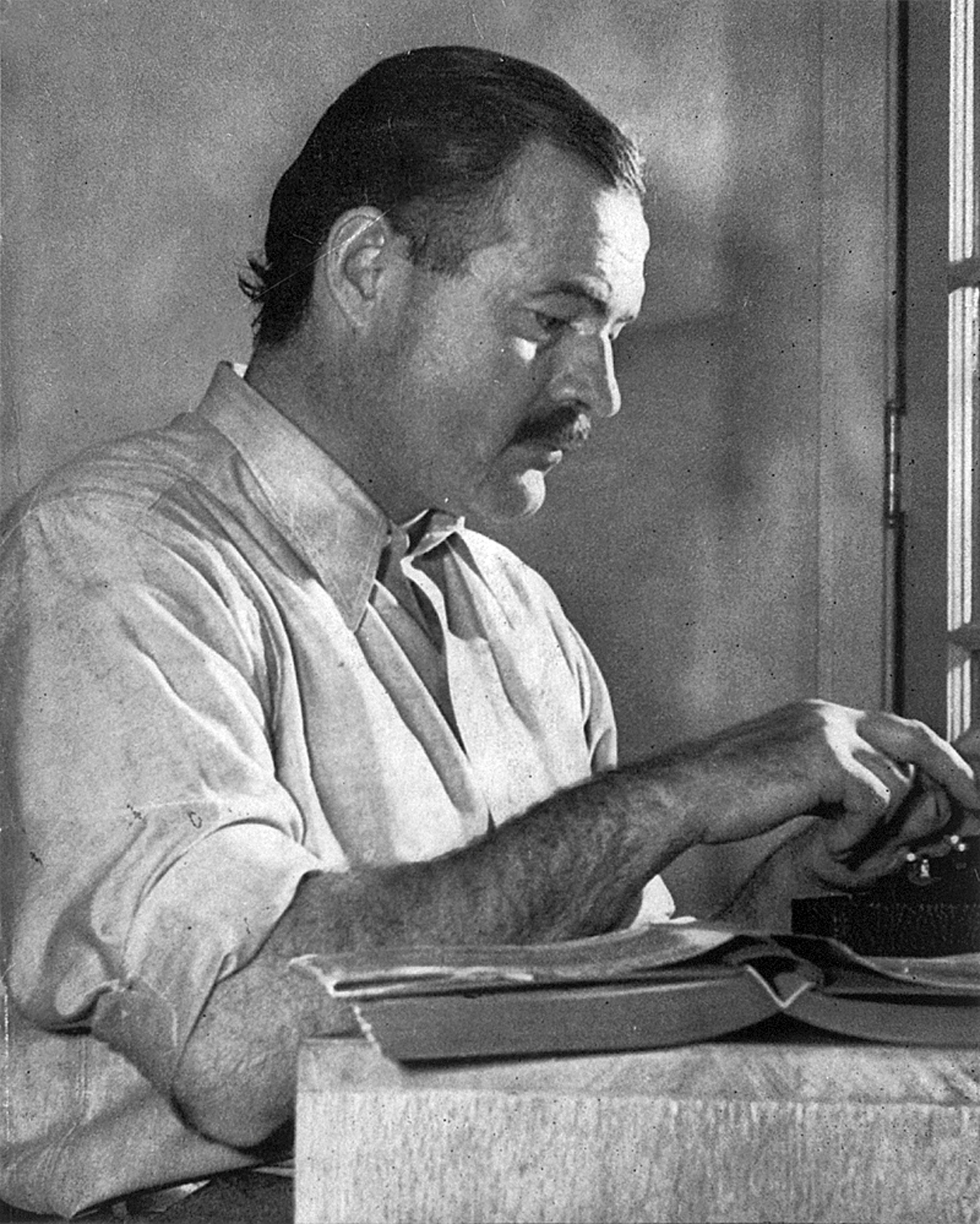
In the past few months I've been trying to catch up on my reading of the "classics" of American literature. I've found that once people learn you majored in English, you often are expected to be well-versed in all such works. Unfortunately, in my case, I was a fairly disingenuous English major (I like to emphasize the '-writing' part of my English-writing degree, as I generally shunned the traditional American canon--and that of Europe, Asia, Africa or anywhere else, for that matter). In truth, the zenith of my belletristic consumption during those years lay somewhere between back copies of Sports Illustrated and copy from the back of my cereal boxes.
I generally avoided the likes of Baldwin, Steinbeck, Mailer and Whitman, except, of course, in those instances when I was without other recourse (such as my senior seminar that focused solely on the works of only one writer -- Emily Dickinson). To the surprise of some, I received exemplary grades in my literature courses. However, to the surprise of few, such achievement has thus far been of little value in the job market. (That includes my experiences applying to work, in part, for the Emily Dickinson museum and another job for which I interviewed with a hiring manager who wrote her senior thesis on the Nun of Amherst.)
There was one class I particularly enjoyed, ironically titled "Classic Fiction." We took on works such as Lolita, Slaughterhouse-Five and Lord of the Flies. But certainly outside of class, my literary intake was limited.
But now, while I have an abundant amount of free time, a shelf full of unread books and an inkling that pursuing graduate school may linger in my near future, I have decided having a slightly deeper reading repertoire may not be such a bad idea after all.
I started a few months ago with the granddaddy of all American literature, Adventures of Huckleberry Finn. As for a review, I agree largely with Hemingway's assessment of the book, though I don't think it's THE best (but as for what is better, I'm not sure):
All modern American literature comes from one book by Mark Twain called 'Huckleberry Finn.' If you read it you must stop where the N***** Jim is stolen from the boys. That is the real end. The rest is just cheating. But it's the best book we've had. All American writing comes from that. There was nothing before. There has been nothing as good since.
Next I worked through most of an old anthology of short stories from Fitzgerald, Hemingway, Thurber, Barthelme and the like. I liked some of it. Mostly the wittier ones. After that, I delved for the third or fourth time into Catch-22, and this time I did manage to finish it. The first chapter is, unfortunately, a bit like finding the pot of gold before seeing the rainbow. I think that is what thwarted my prior attempts--I was absorbed at the beginning only to have the war-story fold in on itself so many times over its 400-plus pages I just couldn't stomach it. Heller's wordplay, which proves at the onset playful and bouncy, soon becomes tiresome and flat. But over a few weeks, I made my way through it and found the last hundred pages or so, when the storyline begins to move forward again, quite enjoyable.
After that, I took a break from war-torn and forlorn fiction and took up a piece of modern non-fiction, Jon Krakauer's Into Thin Air. A shorter and sparser work, I devoured it in about three days. It chronicles the tragedy that killed more than a dozen people on Mount Everest in 1996. Not exactly light subject matter, but it was told compellingly, and at least the subject was people who put themselves in grave danger by choice, not by draft, as was the case in Heller's work. It is probably the best non-fiction book I've read.
But now, alas, I've been deployed again to wartime writing. I'm about a quarter of the way through Hemingway's A Farewell to Arms, not enough yet to form a real opinion of the story. I'm torn over his writing style. I tend to have a preference for authors who previously worked as journalists, such as Hemingway, Vonnegut, David Halberstam and Mitch Albom. Their literature tends to reflect their news training, with generally simple sentence structure and brevity, yet great aptitude for describing setting and building character, presumably honed by having to make the printed word compelling on newsprint in a limited number of column inches. However, Hemingway's is almost so devoid of any unnecessary words that it is at times halting and less than reader-friendly. We'll see, though.
The original point of this post, actually, was to discuss the large volume of war literature that has become regarded as classic. I suppose, in short, that's due to the range of human emotion felt during war by so many different parties. But that will have to suffice, because I've already written some 800 words and buried the lead. And that doesn't fly in the blogosphere.
*Image from wikipedia.*
Saturday, May 30, 2009
Trouble

Thanks to the relative success of a previous music-related post of mine, I have decided to again attempt to arouse some discussion by discussing a 60's era pop-folk singer. Yusuf, aka Yusuf Islam, aka Cat Stevens, aka Steven Demetre Georgiou, as mentioned in the previous post, is one of the more frequently appearing artists on my pandora radio station. Several months ago, I heard for the first of many times on my station Stevens' masterwork "Trouble."
I call this song a masterwork because, aside from its undeniably solid musicality, it grippingly tells Stevens' own personal story of nearly defeated agony, giving a completely transparent view of his feelings at that time. Stevens wrote the song at the age of 19, during a period of nearly a year of mostly bed-ridden recovery from tuberculosis and a collapsed lung. Addressing Trouble (interpreted by many as death) directly, Stevens virtually begs to be left alone after all he has been through: (see full lyrics here)
Trouble
Oh trouble set me free
I have seen your face
And it's too much too much for me
Trouble
Oh trouble can't you see
You're eating my heart away
And there's nothing much left of me
Oh trouble set me free
I have seen your face
And it's too much too much for me
Trouble
Oh trouble can't you see
You're eating my heart away
And there's nothing much left of me
Musically unadorned, featuring mostly Stevens alone on acoustic guitar, songs from this period mark a musical and spiritual transformation for him, from highly orchestrated pop and pop star lifestyle to a more introspective folk style and life focused more on spirituality, including taking up meditation, yoga and vegetarianism.
Its simplicity, clarity and atmospheric style have made it a popular choice for inclusion on movie and TV soundtracks. It was most memorably featured in the 1970 classic black comedy Harold and Maude, during the scene of Maude's impending death. It also was featured on ER and the pilot episode of JJ Abrams' Alias, in a flashback sequence showing Sydney Bristow's ill-fated recruitment into the evil SD-6 program.
The song also has been covered by several artists, most notably by the tragic late-90s folkster Elliott Smith and Pearl Jam frontman Eddie Vedder, who often performs the song at PJ's live shows.
I encourage you to listen to Steven's original version as well as Smith's and Vedder's covers, and comment about the merits of each. I must say, Stevens' takes the cake for me, though this is one of the instances I feel Vedder's throaty howl adds to a performance rather than detracting from it.
Thence, I would also recommend giving a listen to two other songs titled "Trouble" which are not covers--Ray LaMontagne's more upbeat 2004 title track and Coldplay's 2000 piano ballad. Interesting tangents on a similar idea all.
Image credit http://musakazhim.files.wordpress.com/2009/02/yusuf-islam.jpg
Monday, May 18, 2009
Hotel Photos - Hotos, or Photels?
Last week I was sent on assignment with one of my coworkers to cover an event sponsored by one of JMU's institutes. I won't make any comments about the symposium itself, as to maintain professional balance when talking about work on a personal, yet public blog. What I will do is post a link to the facebook page and Twitter feed we set up to cover the event in near real-time. It was an experimental trial for us using social media in new ways, and I'll let others judge how successful our first attempt was.
But that's not the real point of this post, as you could probably guess from its title. The symposium spanned two days, and they put us up in a nice hotel in D.C., the Grand Hyatt. I was pleased with that in an of itself, but when I checked in Tuesday, it got even better. Since we were fairly early, the hotel didn't have the entire block of rooms in our group ready, and they offered to upgrade me to the "Congressional Suite" at no extra cost. Below are some photos of said room.


And, finally below is a shot of the sign of the crappy hole-in-the-wall Chinese joint we ate lunch at in Chinatown. The food was substandard, but the name was too good to pass up.

But that's not the real point of this post, as you could probably guess from its title. The symposium spanned two days, and they put us up in a nice hotel in D.C., the Grand Hyatt. I was pleased with that in an of itself, but when I checked in Tuesday, it got even better. Since we were fairly early, the hotel didn't have the entire block of rooms in our group ready, and they offered to upgrade me to the "Congressional Suite" at no extra cost. Below are some photos of said room.

Central sitting area

Entertainment area with flat-screen TV and stereo

Full bar (not stocked)

Powder room? (Little area outside bathroom)

Breakfast nook/work area

Pool table!
And, finally below is a shot of the sign of the crappy hole-in-the-wall Chinese joint we ate lunch at in Chinatown. The food was substandard, but the name was too good to pass up.

Thursday, May 7, 2009
Jack-ob


This season of LOST is quickly coming to an end, and all the various events of the series are coming to a head. One of the main mysteries throughout the show has been the true identity/form of being of the shadowy and never-fully-seen commander of the Others, Jacob. Since his first mention seasons ago, Jacob's identity has been a source of rampant speculation on the web. I've read entries theorizing that nearly every character seen on or off the island is truly Jacob. Most are ridiculous. The latest and seemingly most credible idea is that Jacob is not anyone we've seen already, as evidenced by ABC's announcing the casting of Mark Pellegrino as "Man #1" for the next and final season, and reports that he was seen filming reenactments of some vital scenes from the LOSTies' pasts. See some non-definitive photos of the set here.
If that's the case, it initially strikes me as less creative than having Jacob be a character we've already seen, but depending on how it's handled, it could be great. If, however, that's not the case, I'll throw in my vote for who it may be (by no means am I convinced).
I vote Jack. First, let's think about the history of Jacob. The earliest indicator we know of his being mentioned was when John Locke in 1954 stormed into the Hostiles' camp, demanding to see Richard Alpert and saying Jacob sent him. We then see in 1977 Richard take Jacob's wishes under consideration in taking a wounded young Ben Linus from Sawyer and Kate, and various times in the original present time of the show, with Ben, Locke, and Hurley visiting the cabin, encountering Christian Shepard and Claire there along the way. Thus, we can fairly assume, Jacob has not always inhabited/lived in/been trapped in the cabin. The cabin was not built until the 1970s or later by Horace Goodspeed (definitive year not known).
If the cabin were built around or before the time of the incident, which we should be seeing in the Season 5 Finale, any number of characters (including Jack) fleeing from ground zero could make their way to the cabin for safety, and become trapped there, possibly in some sort of time-space-shift phenomenon that occurs, thus allowing him to exist in all the different time periods simultaneously. One theory would be that the two separate "present times" currently existing on the island (the 1977 greater-Dharma crew and the 2007 survivors including Locke, Sun and Ben) will be merged again into one, with unknown consequences. Something along the lines of this is supported by producer Damon Lindelof's teaser for the season finale he offered at the Star Trek premier last week: "All I will say is that it is time for the time travel craziness to end," he said. "And once it does end, something very, very surprising will happen in its wake. It is a little bit of a game-changer."
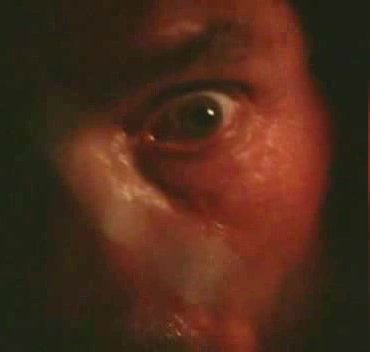
Supporting evidence would include the obvious connection the Shepard family has to the cabin, as we've already seen Jack's undead father, Christian, and his half-sister, Claire, in the cabin. Another would be Jack's status as a detached leader or his people (see also discussion of his tattoos), his in the past being called a "miracle worker" for his ability to heal people, and his name being a variant of Jacob. Then there is also the similar focus on single-eye camera shots of both Jack and Jacob (see pictures, above - top two are Jack, bottom two are Jacob). The eyes appear at least similar enough to be possible.
Finally, on a practical level, it has been reported by the producers that Matthew Fox (who portrays Jack), is the only actor who knows how the series will end (source), thus it would make sense that if Jacob plays a large role in the conclusion of the series, Shepard would already know from his previous portrayals.
NOTE: This is incomplete, and more an exercise of my boredom than a definitive piece of LOST theorizing.
Images from lostpedia.
Sunday, May 3, 2009
Why new technology is sweet

My last post, highlighting the online music service Pandora, gave an example of one new technology that is making my life more enjoyable. It also spawned another example, as follows: Searching YouTube for any Simon and Garfunkel recordings of Jackson C. Frank's "Blues Run the Game," I found a recording by Nick Drake, whom I've mentioned many times previously. After watching/listening to it, YouTube also suggested I listen to his recording of Bob Dylan's classic, "Don't Think Twice, It's All Right."
Though I had read about Drake and Dylan's cross-influence on each other, I had not known Drake actually recorded any covers of Dylan's songs, so this clearly was a nice find for me, and now for any of you who similarly find such things of interest. As it turns out, Drake's recordings of both Frank's and Dylan's songs appear only on what is essentially a bootleg version of some "working tapes" of his from the 60's. After a little research, I'm still not sure if the album, "Tanworth In Arden 1967-1968" has ever been authorized by the Drake estate or released under any legitimate record company, but for Drake enthusiasts, it's a gold mine. It comprises 18 tracks, including the aforementioned covers and some original, never-released songs. Among them is a track, "All My Trials," which features Drake's actress sister, Gabrielle, (pictured, right) in a vocal duet.
I could go on about the intrinsic value of such stuff to collectors, hobbyists and enthusiasts, but I'll otherwise summarize thusly: without web apps such as Pandora, search engines, Wikipedia, YouTube and Amazon, I can't imagine how long such a chain of discoveries would have taken me to make. (With them, it took about 5 minutes). Honestly, I probably never would have heard of Frank or either Drake, or a host of other people, places and things which are common points of thought in my life. I am probably able to learn more every day in a matter of minutes on the web than was possible in hours or even days previously. How did people learn or accomplish anything in the days before such technologies? I'm not sure, but I certainly am appreciative that they're around for people today.
IMAGE: Gabrielle Drake in character on the short-lived 70's British sci-fi TV show "UFO". From http://freespace.virgin.net/b.world/Gabrielle_Drake.jpg.
Subscribe to:
Posts (Atom)

 Posts
Posts


